B.Sc. Media Engineering Project

Film Distribution:
From State Funding to the Editing Room

Exploring film distribution through a macro-level policy analysis and a micro-level documentary portrait.

Saurabh Mishra
FH GraubĂĽnden
August 2026
Hauptreferentin: Prof. Dr. Ulrike Mothes
Korreferent: Peter Indergand

Two Distinct Angles

How do films find their audience in a small, linguistically fragmented market?

My Bachelor Project explores the crucial phase of film distribution from two distinct angles: a macro-level statistical analysis of European state funding, and a micro-level documentary portrait of the creative craftsmanship required to market Swiss films.

The Thesis: Policy & Capital

Two Nations, Two Structural Philosophies (2020–2024)

Swiss Flag Switzerland
The Challenge: The Röstigraben

A fragmented, trilingual domestic market. Distribution must act as an expensive compensatory mechanism to bridge linguistic and cultural divides, prioritizing national cohesion and diversity over sheer commercial performance.

The Policy Logic

Supply-driven. Evaluates purely on "Quality" and "Diversity." Reaching an audience is treated as a downstream post-production distribution challenge heavily subsidized by Diversity Premiums.

Danish Flag Denmark
The Advantage: A Unified Market

A cohesive single-language territory allowing for highly targeted national campaigns. Denmark integrates audience appeal directly into the public funding mandate itself.

The Policy Logic

Bifurcated architecture. Splits funding into a cultural Commissioner Scheme and a commercial Market Scheme. Market viability is enforced upstream during the script and development phase.
Quantitative Results: The Cost of an Audience

Ordinary Least Squares (OLS) regression models tracking the dependency of domestic admissions on state distribution funding.

Swiss Aggregate
5.73 CHF
State Subsidy per Ticket
R2 = .099 p = .001
Danish Aggregate
4.86 CHF
State Subsidy per Ticket
R2 = .338 p < .001
DK Commissioner (Art)
5.55 CHF
State Subsidy per Ticket
R2 = .474 p < .001
DK Market (Commerce)
0.70 CHF
State Subsidy per Ticket
R2 = .031 p = .324 (N.S.)

The data reveals a profound statistical decoupling: For culturally oriented films, distribution funding dictates up to 47.4% of box office success. But for the Danish Market Scheme, the relationship is completely severed (\(p = .324\)). Commercial films show virtually no reliance on post-production capital.

Upstream Design vs. Downstream Compensation

Qualitative textual analysis (KWIC) of the governing legislation provides the definitive answer to the data anomalies.

Denmark mandates viability upstream.

The Filmaftale legally requires a 29% domestic market share. The Market Scheme forces producers to construct a viable commercial architecture (Audience Design) before production funding is granted. They don't need expensive post-production bailouts.

Switzerland funds a downstream bridge.

The FiFV prioritizes artistic Quality and Diversity exclusively during production. Distribution capital functions as a state-funded bridge to artificially push culturally significant films across the language borders of the Röstigraben post-production.

Lexical Frequency in Policy
Mentions of "Quality"
CH (27)
DK (4)
Mentions of "Diversity"
CH (23.5)
Mentions of "Market"
DK (3)

Policy Implications for Switzerland

Institutionalizing the Dual Value Theory

The quantitative "inefficiency" observed in Switzerland (5.73 CHF/ticket) is not a failure, but the explicit cost of maintaining geographic and linguistic diversity across the Röstigraben. However, applying a universal policy track to all films results in an over-reliance on post-production subsidies.

The Recommendation

The Swiss Federal Office of Culture (BAK) should formally split its selective funding into distinct cultural and commercial tracks. By forcing commercially oriented films to prove market viability upstream (script phase), the state can neutralize their reliance on downstream launch subsidies. The capital saved can then be aggressively reallocated to support the expensive cross-border distribution of purely artistic cinema that requires the state's compensatory bridge to survive.

Study Limitations & Constraints

Exogenous Market Distortions

The 2020–2024 scope includes the COVID-19 pandemic. Mandated cinema closures and altered consumer behavior fundamentally disrupted theatrical attendance across Europe, introducing systemic, non-policy-related variance into the performance metrics of both territories.

Institutional Data Asymmetries

Disparities exist between BAK and DFI reporting. The Swiss dataset excludes specific production costs and pan-European MEDIA support due to confidentiality. The Danish dataset aggregates specific audience-oriented funding sub-categories and sometimes disconnects launch subsidies from initial production budgets.

Methodological Boundaries

Cultural market data is inherently heteroscedastic, following a Pareto distribution. While the OLS regressions successfully establish macro-level linear trends, they do not predict individual film trajectories. Additionally, 25 Danish micro-budget films were excluded to strictly isolate the Commissioner and Market schemes, and financial comparisons rely on a flattened 5-year average CHF/DKK exchange rate.

The Lehrprojekt: Crafting the «Greeting Card»

A documentary portrait of the creative craftsmanship behind trailer editing.

The Greeting Card Teaser

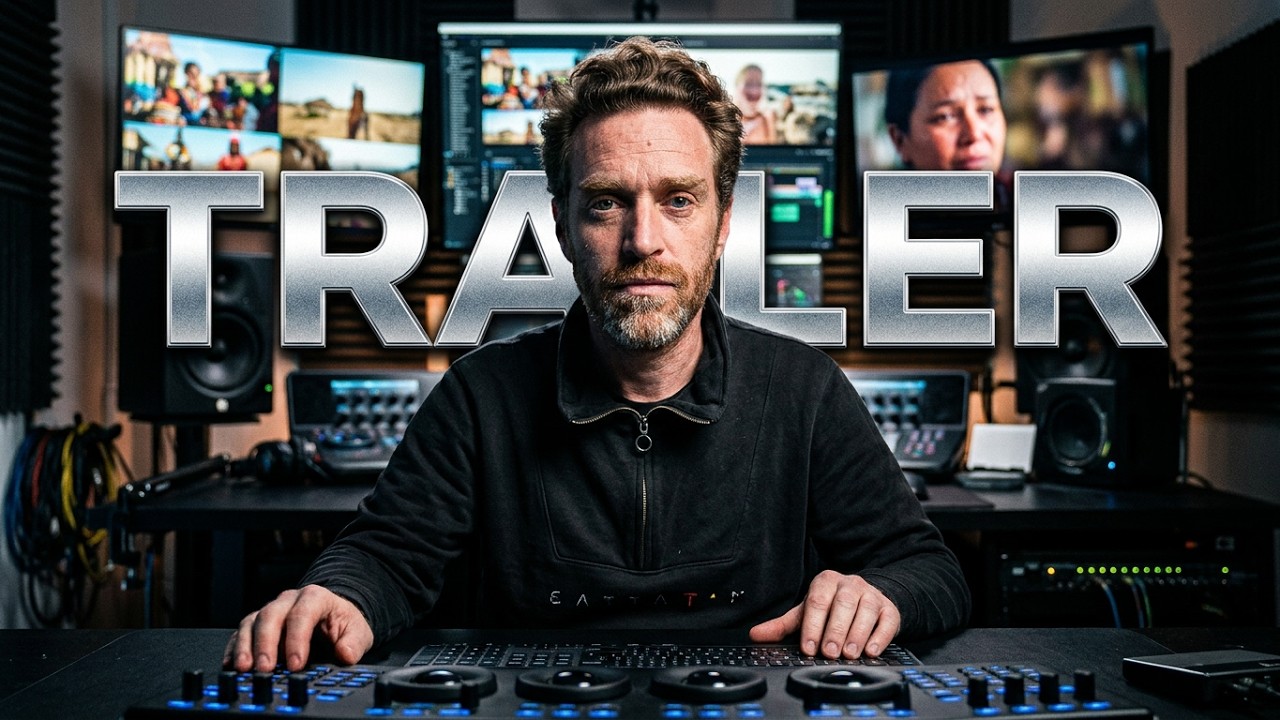
While the thesis explores the policy required to distribute a film, the accompanying short film focuses on the practical tools used to attract an audience. The film profiles Aron Nick, a 42-year-old director and editor who has specialized in creating trailers for Swiss documentary films for over 15 years.

In a small, fragmented market like Switzerland, the trailer serves as a film’s essential «greeting card» and the primary door into its world. Even for art-house films that may not reach massive theatrical audiences, Aron ensures they are treated as vital pieces of cultural history, giving them the quality advertising they deserve.

The documentary highlights his intensive creative process and the complex reality of his profession, where he must constantly adapt to rapid production shifts, technical hurdles, and the conflicting priorities of directors, producers, and distributors.

The Creative Process

Immersion

Watching the film in one uninterrupted session to intuitively feel its tone and soul, without an analytical mindset.

Structuring with Markers

Organizing content using a color-coded marking system for dialogue, neutral scenes, music, and crucial plot points.

The "Pillar" Method

Building non-linear structural fragments—key scenes or endings—and allowing the final narrative to unfold around them.

Managing Stakeholders

Moderating the frequently conflicting priorities of directors, producers, and distributors to honor the filmmaker's vision.

Work Process & Reflection

Concept & Initial Contact

The idea to make a video about trailer editing fit perfectly within the overarching theme of Film Distribution. The simple goal was to create a video that students could watch to understand what a trailer is all about. Contact was established with Aron Nick in February 2026. The initial unstructured audio interview yielded key themes that were synthesized into the BA Proposal.

Production Realities

The shoot was conducted over 7 days. A decision was made to shoot coverage while keeping the main narrative in focus, looking out for interesting tangents. Production was challenging due to double cameras and unfavorable lighting conditions within the studio. Assistance from a friend was requested for the studio setup and B-cam/Drone operation.

Post-Production & AI Tools

Footage was loaded into Davinci Resolve Studio. Synchronizing and cataloging the massive amount of material was sped up using the in-built AI Transcription tool. A narrative decision was made to have the film purely driven by the protagonist, without external voices. Color correction was demanding due to focus issues during the main interview, but utilizing MagicMask AI helped keep the footage usable and polished.